
When someone tells me they are about to build, the first thing I ask about is not the house. It is the land. Where it is, how much it falls, and how you get onto it. Those three things set the budget before a single plan is drawn, and they are the things people find out about last.
Fall, access and location decide the budget before a plan exists
A sloping block does not just mean a different house. It means drop edge beams, split levels, retaining walls around the site, more concrete, more formwork, and a bigger frame to carry it all. Site conditions alone can add $100,000 to $150,000 to a build before you have chosen a tap.
Access is the one nobody prices. If the block sits on a main road, every delivery needs the road managed. Traffic control across a full build runs $20,000 to $50,000, and it is not optional. A truck cannot stop in a clearway because the frames have arrived.
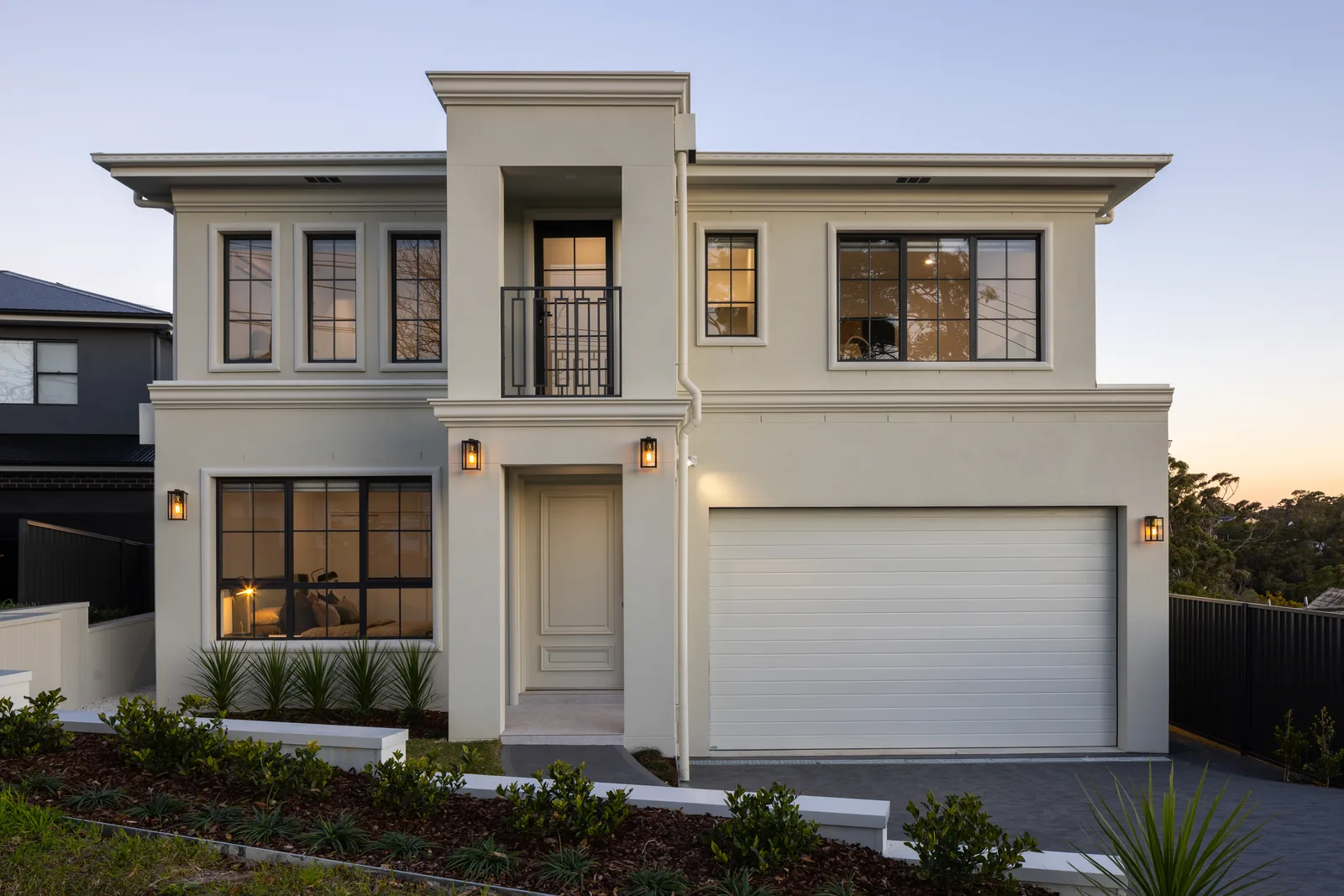
Our Westleigh home is the clearest example on this site. More than five metres of fall across the block, handled with three split levels rather than fought with fill. It is a beautiful house, and a good part of the budget went into ground you cannot see.
Why a project builder may not build on your block at all
Project home companies design for standard blocks: a 10 metre, 12.5 metre or 15 metre frontage, roughly flat, roughly rectangular. That is how the estates are cut. Many will not build where the fall exceeds 1.5 metres across the block, and an odd shaped or triangular block puts you outside their catalogue entirely.
That is not a criticism of them. It is their business model, and it keeps their prices down. But it means that if you have bought a block with character, you have already chosen the kind of builder you need, whether you realised it or not.
Talk to a builder before auction day, not after
I have watched this happen many times. Someone falls in love with a property on the day, bids, wins, and finds out afterwards that the block will cost far more to build on than they assumed. By then the contract is signed.
The fix is simple and almost nobody does it. Before you bid, walk the block with a builder or an architect. Half an hour on site tells you what the fall is doing, where the water goes, how a truck gets in, and whether the house you have in your head fits the ground you are standing on. We do this as part of an intro call and a site visit, and it is the cheapest advice you will ever get.
The same applies to renovations. "It is just a bathroom" is how a lot of expensive projects begin. The bathroom is rarely the problem. It is what the house has to become to give you the bathroom you want.
Do not build the most expensive house in the street
Everyone tells me it is their forever home. I have been building for twenty years, and I can tell you that circumstances change. Jobs move, families grow and shrink, and health does what it does. If you spend $2 million on a home on a $1 million block and the highest sale in the suburb is $2 million, that money is not coming back if you ever need it to.
Do not fall in love with the display home. Do not fall in love with the Instagram photos. Build to the means of the area, and let the quality of the work do the talking. If you are on a waterfront in the eastern suburbs the rules are different, but for most families in the Hills and on the North Shore, this is the discipline that protects you.
Budget the outside, not just the house
This is the thing that is most often overlooked, and it is the reason this business exists. A house handed over with mud to the fence line is not a finished home. Retaining walls are structural, not decorative. The driveway, the pool, the alfresco and the garden are where a family actually lives in this climate, and they are routinely left out of the budget because the builder was only ever pricing the house.
I started as a landscaper, and I spent years arriving at the end of other builders' projects to find the client had run out of money and the site had run out of access. That is why home, pool and garden sit under one contract with us. It is not a sales line. It is the problem I got into building to solve.
What has changed since I first said this
Most of the advice above comes from a podcast I recorded in 2023, and it has not aged. What has changed is the maths. This year I went looking for land to build on for my own family, and even at 80 percent of the asking price I could not make the numbers stack up against the cost of building. Building costs are not coming down, because the trades are not being replaced and the material suppliers do not need to discount. That puts the pressure on land, and it makes the checks above more important, not less. I have written that up properly here.
Before you bid
- Fall. How many metres across the block, and in which direction. Anything over 1.5 metres changes the house and the budget. Our note on why fall matters covers the drainage side.
- Access. Can a truck and an excavator get in, and is the street a main road, a clearway or a bus route.
- Shape and frontage. Narrow, wide, or irregular. It decides which builders can work with it.
- The street. What the best house in it sold for. That is your ceiling, whatever the plan says.
- The outside. Retaining, driveway, pool and garden are part of the build cost. Put them in the number from day one.
- A walk with a builder. Before the auction, not after. It costs nothing and it changes decisions.
Hear it in my own words
The conversation this comes from is on The Mortgage Chat, recorded in July 2023. The section on land starts at 35 minutes 15 seconds, and the point about talking to a builder before auction is at 39 minutes 23 seconds. Some of what I said about the business that day is out of date, so treat the recording as the thinking and this page as the current position.